
Merchandise Description
B Collection Quick pitch Precision Duplex Roller Chains & Bush Chains
| ISO/DIN Chain No. |
Pitch
P |
Roller diameter
d1max |
Width in between inner plates b1min mm |
Pin diameter
d2 max |
Pin duration | Inner plate depth h2max mm |
Plate thickness
t/Tmax |
Transverse pitch
Pt mm |
Tensile power
Qmin |
Average tensile power Q0 |
Weight per meter q kg/m |
|
| Lmax mm |
Lcmax mm |
|||||||||||
| 48B-two | seventy six.two hundred | forty eight.26 | forty five.seventy two | 29.24 | a hundred ninety.four | 198.two | sixty three.eighty | twelve.00/10. | 91.21 | 1000./227272 | 1130. | fifty.00 |
*Straight aspect plates
ROLLER CHAIN
Roller chain or bush roller chain is the type of chain drive most frequently utilized for transmission of mechanical energy on many sorts of domestic, industrial and agricultural equipment, such as conveyors, wire- and tube-drawing equipment, printing presses, cars, motorcycles, and bicycles. It is composed of a series of limited cylindrical rollers held with each other by aspect hyperlinks. It is pushed by a toothed wheel known as a sprocket. It is a simple, reputable, and productive indicates of electricity transmission.
Design OF THE CHAIN
Two different measurements of roller chain, exhibiting development.
There are 2 kinds of hyperlinks alternating in the bush roller chain. The very first type is inner links, obtaining 2 inner plates held with each other by 2 sleeves or bushings upon which rotate 2 rollers. Interior hyperlinks alternate with the next sort, the outer back links, consisting of 2 outer plates held jointly by pins passing through the bushings of the interior backlinks. The “bushingless” roller chain is related in procedure even though not in construction rather of different bushings or sleeves holding the internal plates with each other, the plate has a tube stamped into it protruding from the gap which serves the very same goal. This has the advantage of eliminating 1 action in assembly of the chain.
The roller chain design and style minimizes friction when compared to simpler styles, ensuing in greater performance and less dress in. The first energy transmission chain types lacked rollers and bushings, with equally the inner and outer plates held by pins which right contacted the sprocket enamel nonetheless this configuration exhibited incredibly rapid put on of each the sprocket enamel, and the plates exactly where they pivoted on the pins. This issue was partially solved by the advancement of bushed chains, with the pins keeping the outer plates passing by way of bushings or sleeves connecting the interior plates. This distributed the put on more than a greater location nevertheless the enamel of the sprockets nevertheless wore more swiftly than is desirable, from the sliding friction against the bushings. The addition of rollers bordering the bushing sleeves of the chain and presented rolling get in touch with with the tooth of the sprockets resulting in outstanding resistance to wear of both sprockets and chain as nicely. There is even extremely lower friction, as long as the chain is adequately lubricated. Steady, thoroughly clean, lubrication of roller chains is of major significance for successful procedure as properly as correct tensioning.
LUBRICATION
Many driving chains (for instance, in factory gear, or driving a camshaft inside of an interior combustion engine) operate in clean environments, and thus the wearing surfaces (that is, the pins and bushings) are secure from precipitation and airborne grit, a lot of even in a sealed surroundings such as an oil bathtub. Some roller chains are developed to have o-rings constructed into the space among the outdoors website link plate and the inside of roller url plates. Chain producers began to incorporate this attribute in 1971 after the application was invented by Joseph Montano although working for Whitney Chain of Hartford, Connecticut. O-rings had been incorporated as a way to improve lubrication to the backlinks of power transmission chains, a service that is vitally important to extending their operating lifestyle. These rubber fixtures kind a barrier that retains manufacturing unit applied lubricating grease inside of the pin and bushing wear places. More, the rubber o-rings prevent grime and other contaminants from entering inside the chain linkages, the place such particles would or else trigger significant put on.[citation necessary]
There are also numerous chains that have to operate in filthy situations, and for dimensions or operational factors cannot be sealed. Illustrations incorporate chains on farm tools, bicycles, and chain saws. These chains will always have relatively substantial rates of dress in, specifically when the operators are well prepared to settle for far more friction, much less effectiveness, much more noise and a lot more regular alternative as they neglect lubrication and adjustment.
A lot of oil-dependent lubricants appeal to filth and other particles, ultimately forming an CZPT paste that will compound use on chains. This issue can be circumvented by use of a “dry” PTFE spray, which types a solid film right after application and repels the two particles and humidity.
VARIANTS Design and style
Layout of a roller chain: 1. Outer plate, 2. Interior plate, 3. Pin, 4. Bushing, 5. Roller
If the chain is not being employed for a high wear application (for occasion if it is just transmitting movement from a hand-operated lever to a control shaft on a machine, or a sliding door on an oven), then 1 of the less complicated kinds of chain may nevertheless be utilized. Conversely, exactly where further energy but the easy travel of a smaller pitch is necessary, the chain may possibly be “siamesed” alternatively of just 2 rows of plates on the outer sides of the chain, there might be 3 (“duplex”), 4 (“triplex”), or a lot more rows of plates operating parallel, with bushings and rollers among each adjacent pair, and the identical quantity of rows of teeth running in parallel on the sprockets to match. Timing chains on automotive engines, for case in point, usually have numerous rows of plates named strands.
Roller chain is made in several dimensions, the most widespread American National Expectations Institute (ANSI) specifications becoming forty, 50, sixty, and 80. The first digit(s) show the pitch of the chain in eighths of an inch, with the previous digit being 0 for regular chain, 1 for lightweight chain, and 5 for bushed chain with no rollers. Therefore, a chain with 50 percent-inch pitch would be a #forty whilst a #160 sprocket would have tooth spaced 2 inches aside, and so on. Metric pitches are expressed in sixteenths of an inch hence a metric #8 chain (08B-1) would be equal to an ANSI #forty. Most roller chain is made from plain carbon or alloy steel, but stainless steel is utilized in foodstuff processing equipment or other locations where lubrication is a problem, and nylon or brass are from time to time seen for the exact same explanation.
Roller chain is ordinarily hooked up utilizing a master link (also identified as a connecting url), which normally has 1 pin held by a horseshoe clip instead than friction fit, allowing it to be inserted or taken out with simple equipment. Chain with a removable link or pin is also known as cottered chain, which permits the size of the chain to be modified. Half backlinks (also known as offsets) are available and are utilized to improve the length of the chain by a single roller. Riveted roller chain has the learn url (also identified as a connecting link) “riveted” or mashed on the finishes. These pins are produced to be sturdy and are not removable.
USE
An illustration of 2 ‘ghost’ sprockets tensioning a triplex roller chain method
Roller chains are utilised in reduced- to mid-speed drives at close to 600 to 800 feet for every moment nonetheless, at increased speeds, around 2,000 to 3,000 toes for each moment, V-belts are normally employed because of to wear and noise problems.
A bicycle chain is a form of roller chain. Bicycle chains may have a master website link, or might call for a chain tool for removing and installation. A similar but larger and therefore more powerful chain is employed on most bikes despite the fact that it is often replaced by either a toothed belt or a shaft generate, which supply decrease noise level and fewer maintenance needs.
The wonderful majority of car engines use roller chains to travel the camshaft(s). Really large functionality engines typically use gear drive, and starting in the early 1960s toothed belts have been employed by some manufacturers.
Chains are also employed in forklifts employing hydraulic rams as a pulley to raise and reduce the carriage nonetheless, these chains are not considered roller chains, but are labeled as carry or leaf chains.
Chainsaw chopping chains superficially resemble roller chains but are far more intently relevant to leaf chains. They are pushed by projecting travel back links which also serve to identify the chain CZPT the bar.
Sea Harrier FA.2 ZA195 front (chilly) vector thrust nozzle – the nozzle is rotated by a chain drive from an air motor
A possibly strange use of a pair of bike chains is in the Harrier Leap Jet, in which a chain travel from an air motor is used to rotate the movable motor nozzles, permitting them to be pointed downwards for hovering flight, or to the rear for regular ahead flight, a system recognized as Thrust vectoring.
Use
The effect of dress in on a roller chain is to enhance the pitch (spacing of the links), triggering the chain to grow more time. Notice that this is because of to wear at the pivoting pins and bushes, not from actual stretching of the metal (as does occur to some adaptable steel parts these kinds of as the hand-brake cable of a motor vehicle).
With present day chains it is abnormal for a chain (other than that of a bicycle) to wear until finally it breaks, considering that a worn chain sales opportunities to the fast onset of use on the tooth of the sprockets, with greatest failure becoming the reduction of all the tooth on the sprocket. The sprockets (in particular the smaller sized of the two) undergo a grinding movement that puts a characteristic hook shape into the driven face of the enamel. (This effect is created worse by a chain improperly tensioned, but is unavoidable no make a difference what treatment is taken). The worn enamel (and chain) no lengthier gives smooth transmission of electrical power and this could grow to be apparent from the noise, the vibration or (in vehicle engines employing a timing chain) the variation in ignition timing noticed with a timing mild. Each sprockets and chain ought to be replaced in these cases, because a new chain on worn sprockets will not final prolonged. Even so, in considerably less significant cases it may be possible to save the more substantial of the 2 sprockets, considering that it is often the more compact 1 that suffers the most dress in. Only in very mild-excess weight applications this kind of as a bicycle, or in severe circumstances of inappropriate rigidity, will the chain generally jump off the sprockets.
The lengthening owing to wear of a chain is calculated by the following method:
M = the duration of a number of backlinks measured
S = the quantity of hyperlinks calculated
P = Pitch
In sector, it is normal to check the movement of the chain tensioner (no matter whether guide or automated) or the actual size of a drive chain (1 rule of thumb is to substitute a roller chain which has elongated 3% on an adjustable generate or 1.5% on a fixed-center generate). A simpler technique, notably ideal for the cycle or motorbike consumer, is to try to pull the chain away from the more substantial of the 2 sprockets, even though guaranteeing the chain is taut. Any significant movement (e.g. producing it achievable to see through a gap) almost certainly indicates a chain worn up to and over and above the restrict. Sprocket damage will result if the dilemma is dismissed. Sprocket put on cancels this impact, and might mask chain dress in.
CHAIN Power
The most widespread evaluate of roller chain’s strength is tensile power. Tensile toughness represents how much load a chain can face up to below a one-time load ahead of breaking. Just as important as tensile power is a chain’s exhaustion strength. The essential variables in a chain’s exhaustion strength is the top quality of steel utilised to manufacture the chain, the heat treatment of the chain parts, the high quality of the pitch hole fabrication of the linkplates, and the type of shot additionally the depth of shot peen coverage on the linkplates. Other aspects can include the thickness of the linkplates and the design (contour) of the linkplates. The rule of thumb for roller chain operating on a continuous generate is for the chain load to not exceed a mere 1/6 or 1/9 of the chain’s tensile power, dependent on the sort of learn backlinks utilized (push-fit vs. slip-suit)[citation needed]. Roller chains operating on a continuous travel beyond these thresholds can and generally do are unsuccessful prematurely by way of linkplate fatigue failure.
The common least final energy of the ANSI 29.1 steel chain is twelve,five hundred x (pitch, in inches)two. X-ring and O-Ring chains significantly decrease use by implies of inner lubricants, increasing chain lifestyle. The interior lubrication is inserted by indicates of a vacuum when riveting the chain together.
CHAIN STHangZhouRDS
Standards corporations (these kinds of as ANSI and ISO) preserve standards for design, dimensions, and interchangeability of transmission chains. For case in point, the subsequent Table demonstrates info from ANSI standard B29.1-2011 (Precision Power Transmission Roller Chains, Attachments, and Sprockets) created by the American Society of Mechanical Engineers (ASME). See the references[8][9][10] for extra info.
ASME/ANSI B29.1-2011 Roller Chain Common SizesSizePitchMaximum Roller DiameterMinimum Final Tensile StrengthMeasuring Load25
| ASME/ANSI B29.1-2011 Roller Chain Standard Dimensions | ||||
| Dimension | Pitch | Optimum Roller Diameter | Minimum Final Tensile Toughness | Measuring Load |
|---|---|---|---|---|
| 25 | .250 in (6.35 mm) | .a hundred thirty in (3.30 mm) | 780 lb (350 kg) | eighteen lb (8.2 kg) |
| 35 | .375 in (9.fifty three mm) | .two hundred in (5.08 mm) | one,760 lb (800 kg) | 18 lb (8.2 kg) |
| 41 | .500 in (twelve.70 mm) | .306 in (7.seventy seven mm) | 1,500 lb (680 kg) | eighteen lb (8.2 kg) |
| forty | .five hundred in (12.70 mm) | .312 in (7.92 mm) | 3,a hundred twenty five lb (1,417 kg) | 31 lb (fourteen kg) |
| fifty | .625 in (fifteen.88 mm) | .400 in (ten.16 mm) | four,880 lb (2,210 kg) | forty nine lb (22 kg) |
| 60 | .750 in (19.05 mm) | .469 in (11.91 mm) | seven,030 lb (3,a hundred ninety kg) | 70 lb (32 kg) |
| 80 | 1.000 in (twenty five.forty mm) | .625 in (fifteen.88 mm) | twelve,500 lb (5,700 kg) | one hundred twenty five lb (fifty seven kg) |
| 100 | one.250 in (31.75 mm) | .750 in (19.05 mm) | 19,531 lb (8,859 kg) | 195 lb (88 kg) |
| 120 | 1.five hundred in (38.10 mm) | .875 in (22.23 mm) | 28,125 lb (12,757 kg) | 281 lb (127 kg) |
| a hundred and forty | one.750 in (44.45 mm) | 1.000 in (twenty five.40 mm) | 38,280 lb (seventeen,360 kg) | 383 lb (174 kg) |
| a hundred and sixty | 2.000 in (fifty.80 mm) | one.one hundred twenty five in (28.fifty eight mm) | fifty,000 lb (23,000 kg) | 500 lb (230 kg) |
| 180 | two.250 in (57.15 mm) | one.460 in (37.08 mm) | sixty three,280 lb (28,seven-hundred kg) | 633 lb (287 kg) |
| two hundred | two.500 in (63.50 mm) | 1.562 in (39.sixty seven mm) | 78,175 lb (35,460 kg) | 781 lb (354 kg) |
| 240 | 3.000 in (76.20 mm) | one.875 in (47.63 mm) | 112,500 lb (fifty one,000 kg) | 1,000 lb (450 kg |
For mnemonic reasons, beneath is yet another presentation of essential proportions from the same standard, expressed in fractions of an inch (which was portion of the pondering guiding the selection of chosen figures in the ANSI regular):
| Pitch (inches) | Pitch expressed in eighths |
ANSI normal chain amount |
Width (inches) |
|---|---|---|---|
| 1⁄four | 2⁄8 | 2five | 1⁄8 |
| 3⁄8 | three⁄8 | threefive | three⁄sixteen |
| 1⁄two | four⁄8 | fourone | one⁄four |
| 1⁄two | 4⁄eight | 4 | 5⁄16 |
| five⁄8 | 5⁄8 | 5 | three⁄eight |
| 3⁄four | 6⁄eight | six | 1⁄2 |
| 1 | eight⁄eight | eight | five⁄eight |
Notes:
one. The pitch is the length amongst roller facilities. The width is the length in between the url plates (i.e. slightly far more than the roller width to let for clearance).
two. The appropriate-hand digit of the regular denotes 0 = regular chain, 1 = lightweight chain, 5 = rollerless bushing chain.
3. The still left-hand digit denotes the variety of eighths of an inch that make up the pitch.
four. An “H” adhering to the regular number denotes heavyweight chain. A hyphenated quantity adhering to the standard variety denotes double-strand (2), triple-strand (3), and so on. Thus 60H-3 denotes quantity sixty heavyweight triple-strand chain.
A standard bicycle chain (for derailleur gears) uses narrow 1⁄2-inch-pitch chain. The width of the chain is variable, and does not affect the load capacity. The much more sprockets at the rear wheel (historically 3-6, nowadays 7-twelve sprockets), the narrower the chain. Chains are sold according to the variety of speeds they are made to perform with, for illustration, “ten pace chain”. Hub gear or single velocity bicycles use 1/2″ x 1/8″ chains, where 1/8″ refers to the greatest thickness of a sprocket that can be employed with the chain.
Normally chains with parallel shaped back links have an even number of hyperlinks, with every slender url followed by a broad 1. Chains built up with a uniform sort of link, slim at 1 and wide at the other end, can be manufactured with an odd number of backlinks, which can be an advantage to adapt to a special chainwheel-distance on the other facet this kind of a chain tends to be not so sturdy.
Roller chains produced using ISO normal are at times called as isochains.
WHY Decide on US
one. Trustworthy Good quality Assurance Method
two. Cutting-Edge Laptop-Controlled CNC Devices
three. Bespoke Answers from Highly Experienced Professionals
4. Customization and OEM Available for Specific Software
5. Comprehensive Inventory of Spare Parts and Components
six. Nicely-Produced Globally Marketing Community
seven. Efficient Following-Sale Service Program
The 219 sets of innovative automatic production tools provide guarantees for higher product top quality. The 167 engineers and experts with senior professional titles can style and develop items to satisfy the exact demands of buyers, and OEM customizations are also obtainable with us. Our sound international support community can provide customers with timely after-product sales technological companies.
We are not just a maker and supplier, but also an industry specialist. We function professional-actively with you to provide expert guidance and solution tips in buy to end up with a most cost effective item available for your particular application. The clients we provide worldwide range from finish users to distributors and OEMs. Our OEM replacements can be substituted wherever necessary and appropriate for each fix and new assemblies.
|
US $120 / Meter | |
10 Meters (Min. Order) |
###
| Standard or Nonstandard: | Standard |
|---|---|
| Application: | Textile Machinery, Garment Machinery, Conveyer Equipment, Packaging Machinery, Electric Cars, Motorcycle, Food Machinery, Marine, Mining Equipment, Agricultural Machinery, Car, Food and Beverage Industry, Motorcycle Parts |
| Surface Treatment: | Polishing |
| Structure: | Roller Chain |
| Material: | Alloy |
| Type: | Short Pitch Chain |
###
| Samples: |
US$ 0/Meter
1 Meter(Min.Order) |
|---|
###
| Customization: |
Available
|
|---|
###
| ISO/DIN Chain No. |
Pitch
P |
Roller diameter
d1max |
Width between inner plates b1min mm |
Pin diameter
d2 max |
Pin length | Inner plate depth h2max mm |
Plate thickness
t/Tmax |
Transverse pitch
Pt mm |
Tensile strength
Qmin |
Average tensile strength Q0 |
Weight per meter q kg/m |
|
| Lmax mm |
Lcmax mm |
|||||||||||
| 48B-2 | 76.200 | 48.26 | 45.72 | 29.24 | 190.4 | 198.2 | 63.80 | 12.00/10.0 | 91.21 | 1000.0/227272 | 1130.0 | 50.00 |
###
| ASME/ANSI B29.1-2011 Roller Chain Standard Sizes | ||||
| Size | Pitch | Maximum Roller Diameter | Minimum Ultimate Tensile Strength | Measuring Load |
|---|---|---|---|---|
| 25 | 0.250 in (6.35 mm) | 0.130 in (3.30 mm) | 780 lb (350 kg) | 18 lb (8.2 kg) |
| 35 | 0.375 in (9.53 mm) | 0.200 in (5.08 mm) | 1,760 lb (800 kg) | 18 lb (8.2 kg) |
| 41 | 0.500 in (12.70 mm) | 0.306 in (7.77 mm) | 1,500 lb (680 kg) | 18 lb (8.2 kg) |
| 40 | 0.500 in (12.70 mm) | 0.312 in (7.92 mm) | 3,125 lb (1,417 kg) | 31 lb (14 kg) |
| 50 | 0.625 in (15.88 mm) | 0.400 in (10.16 mm) | 4,880 lb (2,210 kg) | 49 lb (22 kg) |
| 60 | 0.750 in (19.05 mm) | 0.469 in (11.91 mm) | 7,030 lb (3,190 kg) | 70 lb (32 kg) |
| 80 | 1.000 in (25.40 mm) | 0.625 in (15.88 mm) | 12,500 lb (5,700 kg) | 125 lb (57 kg) |
| 100 | 1.250 in (31.75 mm) | 0.750 in (19.05 mm) | 19,531 lb (8,859 kg) | 195 lb (88 kg) |
| 120 | 1.500 in (38.10 mm) | 0.875 in (22.23 mm) | 28,125 lb (12,757 kg) | 281 lb (127 kg) |
| 140 | 1.750 in (44.45 mm) | 1.000 in (25.40 mm) | 38,280 lb (17,360 kg) | 383 lb (174 kg) |
| 160 | 2.000 in (50.80 mm) | 1.125 in (28.58 mm) | 50,000 lb (23,000 kg) | 500 lb (230 kg) |
| 180 | 2.250 in (57.15 mm) | 1.460 in (37.08 mm) | 63,280 lb (28,700 kg) | 633 lb (287 kg) |
| 200 | 2.500 in (63.50 mm) | 1.562 in (39.67 mm) | 78,175 lb (35,460 kg) | 781 lb (354 kg) |
| 240 | 3.000 in (76.20 mm) | 1.875 in (47.63 mm) | 112,500 lb (51,000 kg) | 1,000 lb (450 kg |
###
| Pitch (inches) | Pitch expressed in eighths |
ANSI standard chain number |
Width (inches) |
|---|---|---|---|
| 1⁄4 | 2⁄8 | 25 | 1⁄8 |
| 3⁄8 | 3⁄8 | 35 | 3⁄16 |
| 1⁄2 | 4⁄8 | 41 | 1⁄4 |
| 1⁄2 | 4⁄8 | 40 | 5⁄16 |
| 5⁄8 | 5⁄8 | 50 | 3⁄8 |
| 3⁄4 | 6⁄8 | 60 | 1⁄2 |
| 1 | 8⁄8 | 80 | 5⁄8 |
|
US $120 / Meter | |
10 Meters (Min. Order) |
###
| Standard or Nonstandard: | Standard |
|---|---|
| Application: | Textile Machinery, Garment Machinery, Conveyer Equipment, Packaging Machinery, Electric Cars, Motorcycle, Food Machinery, Marine, Mining Equipment, Agricultural Machinery, Car, Food and Beverage Industry, Motorcycle Parts |
| Surface Treatment: | Polishing |
| Structure: | Roller Chain |
| Material: | Alloy |
| Type: | Short Pitch Chain |
###
| Samples: |
US$ 0/Meter
1 Meter(Min.Order) |
|---|
###
| Customization: |
Available
|
|---|
###
| ISO/DIN Chain No. |
Pitch
P |
Roller diameter
d1max |
Width between inner plates b1min mm |
Pin diameter
d2 max |
Pin length | Inner plate depth h2max mm |
Plate thickness
t/Tmax |
Transverse pitch
Pt mm |
Tensile strength
Qmin |
Average tensile strength Q0 |
Weight per meter q kg/m |
|
| Lmax mm |
Lcmax mm |
|||||||||||
| 48B-2 | 76.200 | 48.26 | 45.72 | 29.24 | 190.4 | 198.2 | 63.80 | 12.00/10.0 | 91.21 | 1000.0/227272 | 1130.0 | 50.00 |
###
| ASME/ANSI B29.1-2011 Roller Chain Standard Sizes | ||||
| Size | Pitch | Maximum Roller Diameter | Minimum Ultimate Tensile Strength | Measuring Load |
|---|---|---|---|---|
| 25 | 0.250 in (6.35 mm) | 0.130 in (3.30 mm) | 780 lb (350 kg) | 18 lb (8.2 kg) |
| 35 | 0.375 in (9.53 mm) | 0.200 in (5.08 mm) | 1,760 lb (800 kg) | 18 lb (8.2 kg) |
| 41 | 0.500 in (12.70 mm) | 0.306 in (7.77 mm) | 1,500 lb (680 kg) | 18 lb (8.2 kg) |
| 40 | 0.500 in (12.70 mm) | 0.312 in (7.92 mm) | 3,125 lb (1,417 kg) | 31 lb (14 kg) |
| 50 | 0.625 in (15.88 mm) | 0.400 in (10.16 mm) | 4,880 lb (2,210 kg) | 49 lb (22 kg) |
| 60 | 0.750 in (19.05 mm) | 0.469 in (11.91 mm) | 7,030 lb (3,190 kg) | 70 lb (32 kg) |
| 80 | 1.000 in (25.40 mm) | 0.625 in (15.88 mm) | 12,500 lb (5,700 kg) | 125 lb (57 kg) |
| 100 | 1.250 in (31.75 mm) | 0.750 in (19.05 mm) | 19,531 lb (8,859 kg) | 195 lb (88 kg) |
| 120 | 1.500 in (38.10 mm) | 0.875 in (22.23 mm) | 28,125 lb (12,757 kg) | 281 lb (127 kg) |
| 140 | 1.750 in (44.45 mm) | 1.000 in (25.40 mm) | 38,280 lb (17,360 kg) | 383 lb (174 kg) |
| 160 | 2.000 in (50.80 mm) | 1.125 in (28.58 mm) | 50,000 lb (23,000 kg) | 500 lb (230 kg) |
| 180 | 2.250 in (57.15 mm) | 1.460 in (37.08 mm) | 63,280 lb (28,700 kg) | 633 lb (287 kg) |
| 200 | 2.500 in (63.50 mm) | 1.562 in (39.67 mm) | 78,175 lb (35,460 kg) | 781 lb (354 kg) |
| 240 | 3.000 in (76.20 mm) | 1.875 in (47.63 mm) | 112,500 lb (51,000 kg) | 1,000 lb (450 kg |
###
| Pitch (inches) | Pitch expressed in eighths |
ANSI standard chain number |
Width (inches) |
|---|---|---|---|
| 1⁄4 | 2⁄8 | 25 | 1⁄8 |
| 3⁄8 | 3⁄8 | 35 | 3⁄16 |
| 1⁄2 | 4⁄8 | 41 | 1⁄4 |
| 1⁄2 | 4⁄8 | 40 | 5⁄16 |
| 5⁄8 | 5⁄8 | 50 | 3⁄8 |
| 3⁄4 | 6⁄8 | 60 | 1⁄2 |
| 1 | 8⁄8 | 80 | 5⁄8 |
Different types of drive chains
Drive chains are an important part of many different types of machinery. In this article, we’ll cover a variety of different types, from square links to engineered steel. From there, we’ll discuss different types of chains, such as double and leaf chains. Let’s take a closer look at each one. Once you know what kind of chain you’re looking for, you can make a buying decision. If you’re not sure where to start, read on to learn more about these types of chains, what to look for when choosing, and how to choose the right chain for your specific application.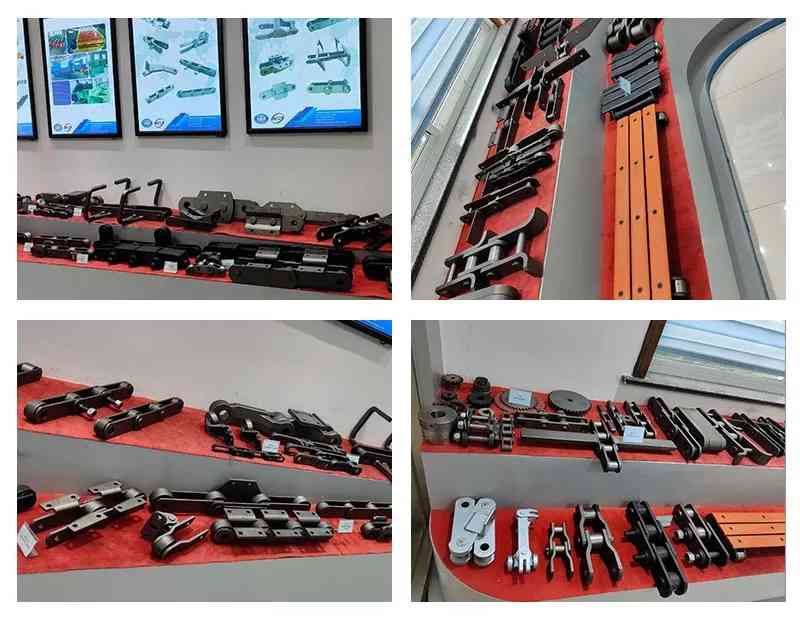
Engineering Steel Chain
Engineering steel chains are widely used in conveyors, bucket elevators, tensioning links, transmission chains, etc., and have the characteristics of high strength, low friction, and good shock resistance. Early models of these chains were developed for difficult-to-convey applications. They were originally made of all-steel components with flanged rollers made of cast iron. They then increase in size, strength, and spacing in response to the heavy-duty requirements of the industry.
Today, these chains are used in a wide variety of applications, including tough oil drilling operations and forklifts. They offer excellent durability and high power transfer and are available in a variety of materials. They are also ideal for harsh environments such as harsh oil drilling. Their high-strength steel construction means they can handle harsh operating conditions. Their durability is an essential feature of any chain, and CZPT Chains offers a full line of engineered steel chains to meet your exact specifications.
A drive chain made of engineered steel consists of several components: links, pin joints, and sprockets. This allows them to carry heavy loads with minimal stretch. Due to its internal mechanical advantage, the chain runs around the sprockets with almost 100% efficiency. Also, the chain is made of special steel that can withstand certain conditions. They are available in different alloys and grades. If you have any questions, please feel free to contact us.
Roller chain wear is a major problem for conveyor and drive chains. In these cases, the rollers of the chain are more prone to wear than the bushings, so lubrication is essential. Many chains are designed to work with little or no lubrication. Finally, material selection is an important factor in the design of engineered steel conveyor chains. These factors will help ensure that the chain stays in good shape.
Conveyor Chains with Square Links
There are two basic types of conveyor chains. The first is the square chain, commonly used in cranes and hoists. It’s cheap to manufacture but more prone to overload. The second is a chain that uses hook joints or detachable links. These are used for short-term power transmission and have a lubricating effect. Usually, they are made of malleable iron but can be more expensive.
Another type of chain is the removable steel chain. For moderate loads, this is an easy-to-install option. The closed end of the tab should face the sprocket. It is very important to maintain the alignment of the chain relative to the sprockets. The chain should be adjusted to suit the load before installation. It is important to keep the chain lubricated to prolong its life.
Steel chains offer a wider selection of materials and heat treatments. This chain is also more accurate than its counterpart. Steel bushing chains are less expensive but require more frequent lubrication. Steel roller chains are often used for long conveyor centers or high loads. However, lower friction requirements require lower strength chains. This means that chains with square links are a better choice for smaller conveyors. But this style has its drawbacks.
Bushing chains are made of steel and are an excellent alternative for small-scale applications. The pins are silent and prevent tooth damage. Bushed roller chains are also used to a certain extent as conveyor chains. However, the main advantage of the bushing roller chain is that it does not make any noise at all. Bushed roller chains are made of alloy steel and are suitable for very low-speed applications.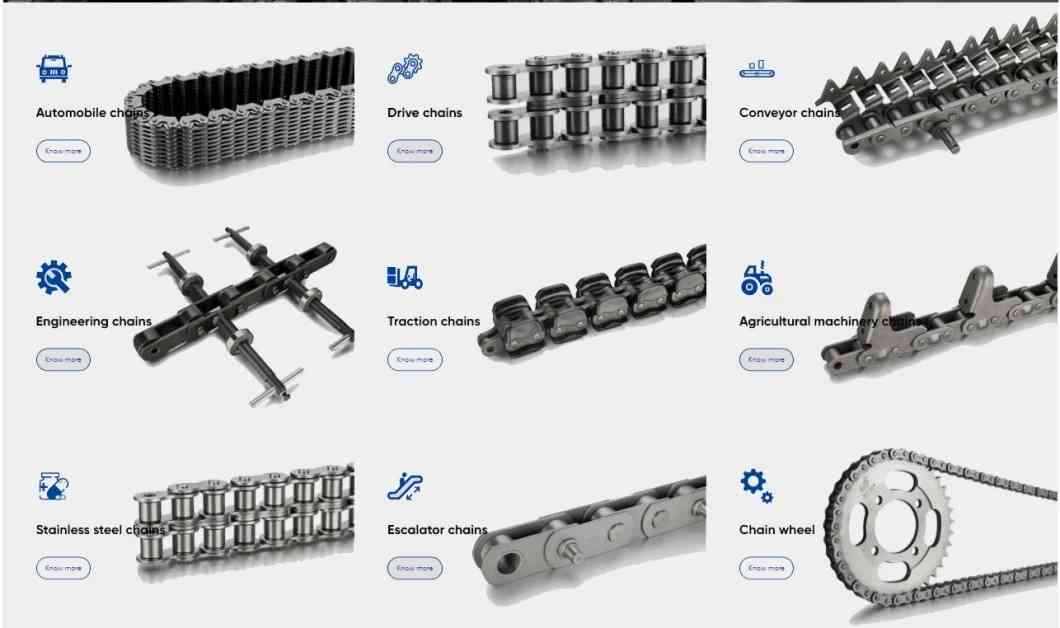
double chain
Double-strand roller chain, also known as a double-strand, consists of two rows of single-strand links. It has high impact strength, low weight, and a small form factor. Duplex roller chains are manufactured using CZPT technology, which uses solid rollers to improve sprocket tooth rotation and reduce shock loads. During the manufacturing process, the metal is heat-treated to increase strength and reduce corrosion.
A single chain is designed for a single sprocket, while a double chain consists of two identical chains connected side by side. Double chains are more durable than simple chains because double rollers contain roller bearings, pins, and other components. Simplex drive chains can handle high loads, while duplex drive chains are designed for medium-duty applications.
leaf chain
Blade chains are used in reciprocating devices such as forklifts. They are also used in machine tools for counterweight chains. Leaf chains come in a variety of lengths, usually with female or male ends. Leaf chains can be manufactured in even or odd pitches and are ideal for lifting and balancing. This article will introduce some key uses of leaf chains in drive chains. Additionally, we’ll discuss how they are made and how they behave in applications.
Most drive chains today are made from leaf chains. These chains are designed to increase the strength of the chain. However, they are less expensive than other types of chains. You can also purchase specialized leaf chains for certain applications. CZPT Chain also offers custom leaf chains for your unique needs. Leaf chains are commonly used in forklifts, material handling, and lifting applications. They are usually made from high-quality components. The BL1688 Leaf Chain has 8 x 8 laces and is sold in 10-foot boxes or 25- to 100-foot reels. The leaf chain can be cut as needed.
When selecting a leaf chain for a specific application, consider the minimum tensile strength of the chain. The minimum breaking strength must be high enough to protect the worker or machine, but must also be legal for the type of machine. Most manufacturers publish this minimum strength requirement. To make the most durable leaf chain, design engineers must consider the ISO4347 standard when choosing the right leaf chain. Leaf chain manufacturers tend to exceed international standards by about 20%.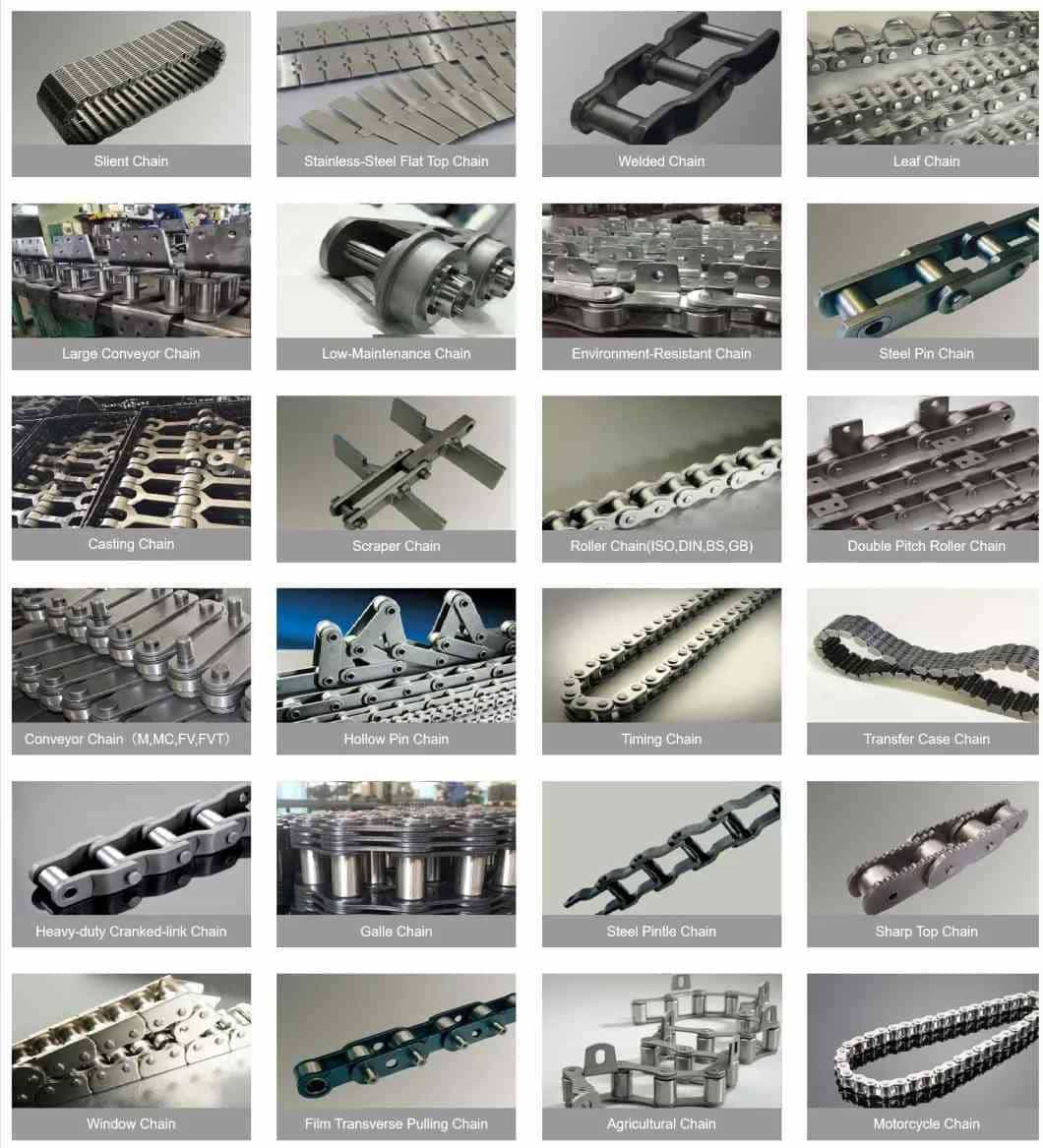
roller chain
Roller chains are made from a variety of materials. Some common materials include steel and stainless steel. The most suitable material depends on cost, environmental conditions, and horsepower transmission design. Chain manufacturers can optimize the material for the intended use. Depending on its size, spacing, and special construction techniques, it can be made lighter or heavier. This is an advantage for applications in noise-sensitive environments. Below are some examples of common uses for roller chains.
The wear of the components in a roller chain is an unavoidable part of its operation. The amount of elongation depends on factors such as lubrication, load, and the frequency of articulation between the pin and bushing. Manufacturing critical wear parts require careful attention to detail. Proper raw materials, manufacturing, and assembly are critical to product performance and longevity. If these components aren’t of high quality, they won’t last as long as the chain should.
The industry recommends measuring the wear elongation of the roller chain to determine when it needs to be replaced. Proper safety procedures must be used to measure chain tension. The tight span of the chain shall be measured by applying the measuring load specified by ANSI. A correctly measured roller chain is safe to use. For motorcycles, the chain is bigger and stronger. Often, toothed belts are replaced by shaft drives because they are less noisy and require less maintenance.
Tensile strength is the most commonly used measurement method for roller chains. This measurement represents the amount of load the chain can withstand before it breaks. Fatigue strength is another measure of durability. Fatigue strength measures how long a roller chain can withstand long-term use before failing. These two measurements are closely related and maybe the same or different. In addition to tensile strength, fatigue strength is a useful factor to consider when purchasing a chain.


editor by czh 2022-12-07